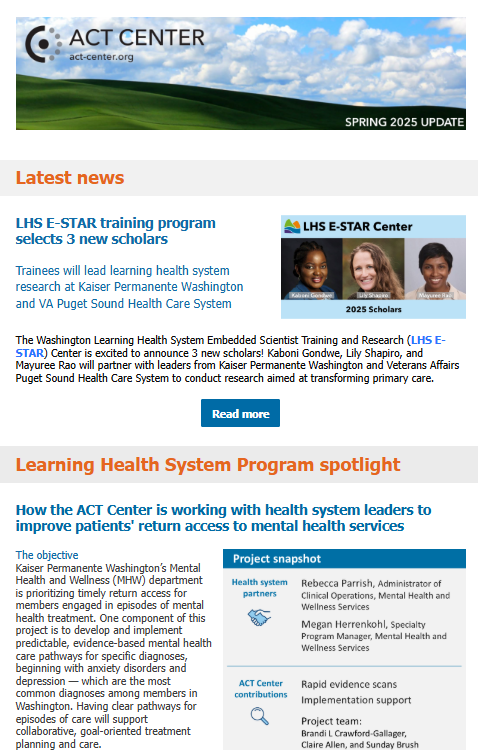
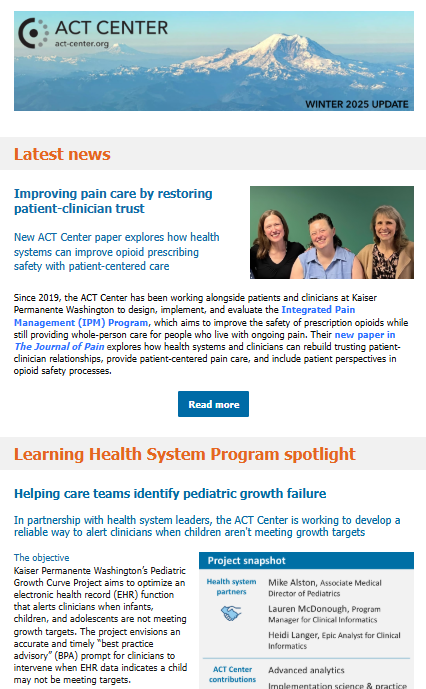
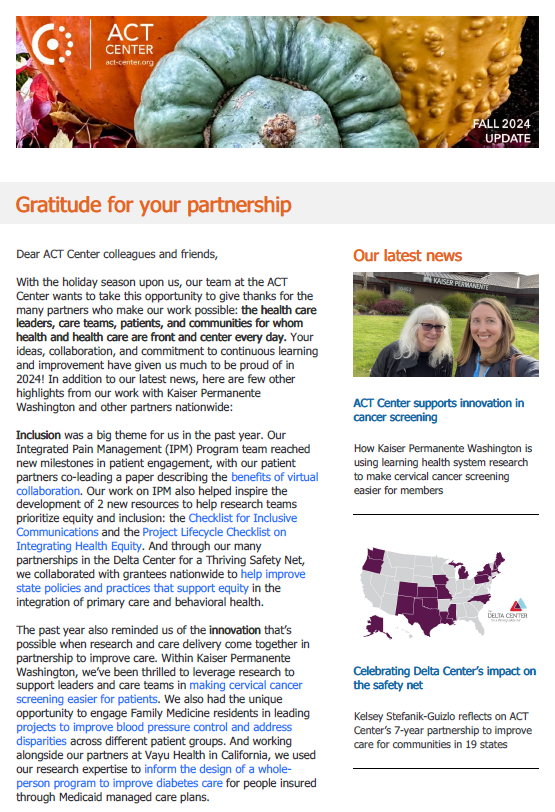
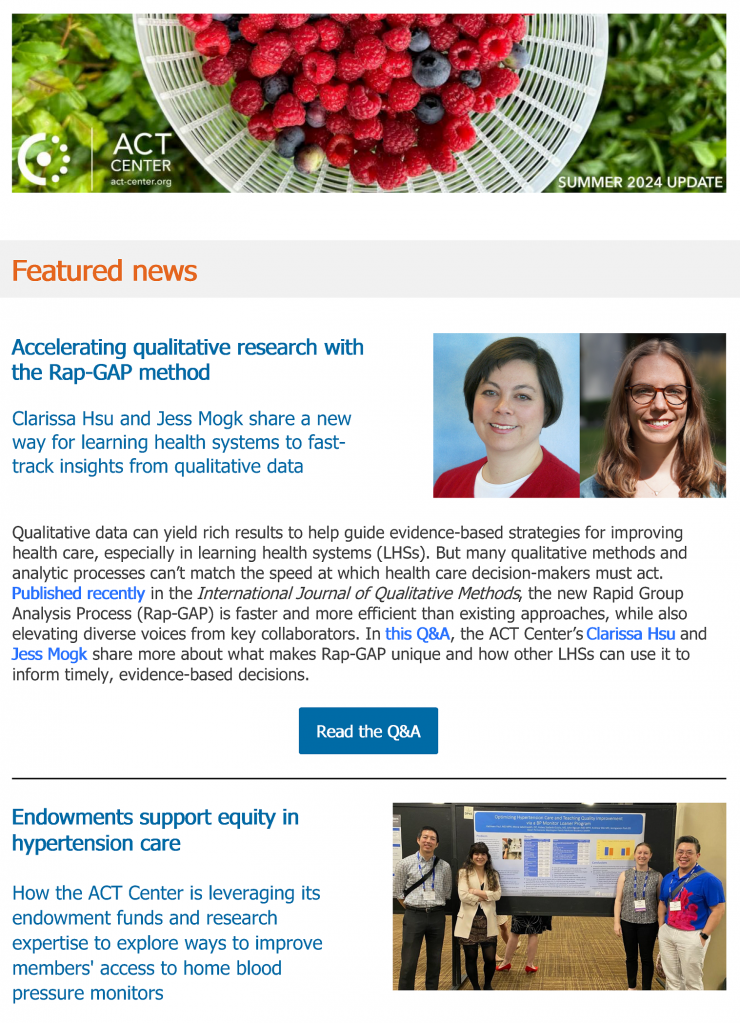
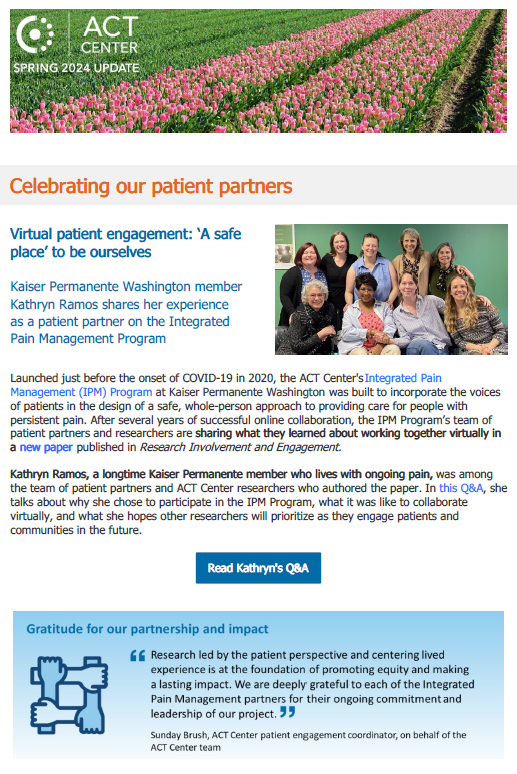
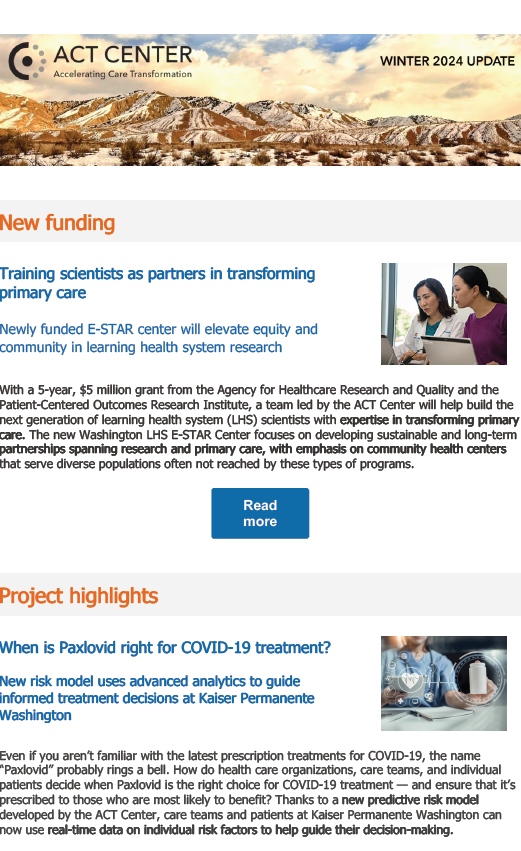
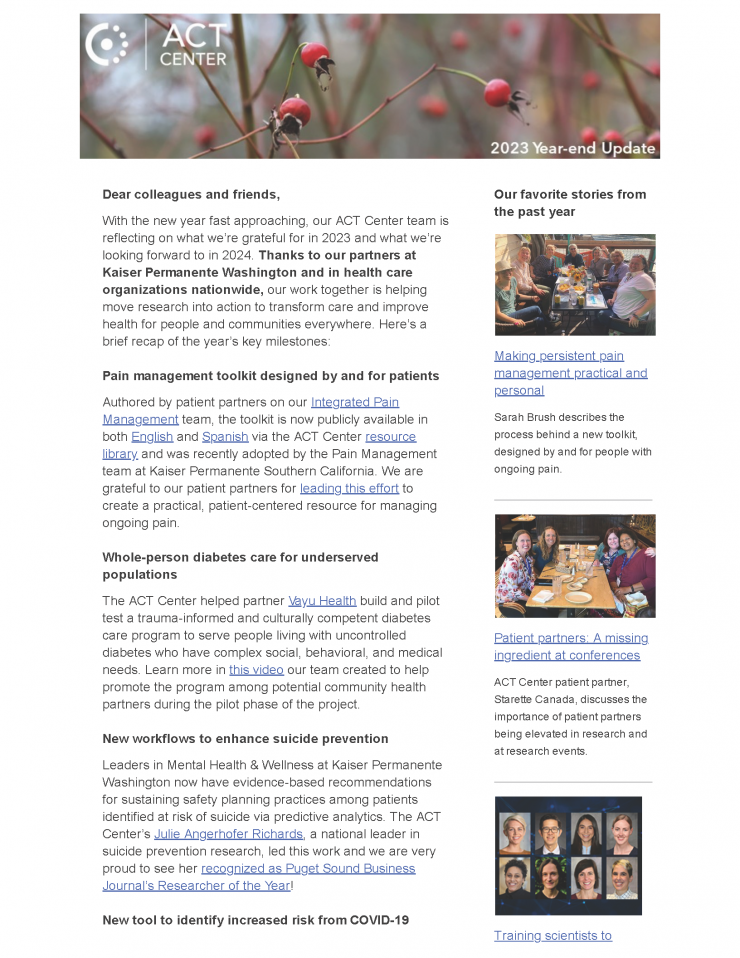
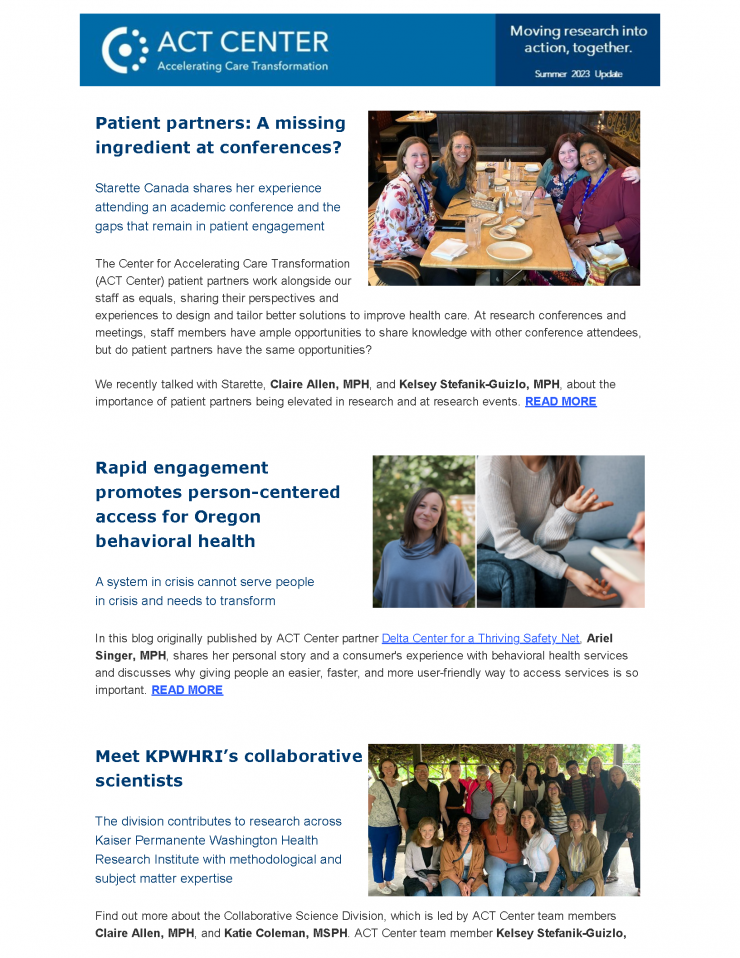
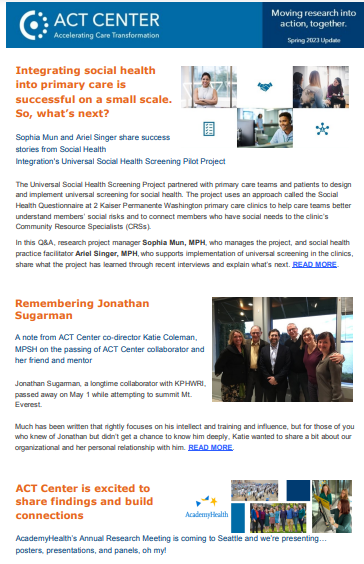
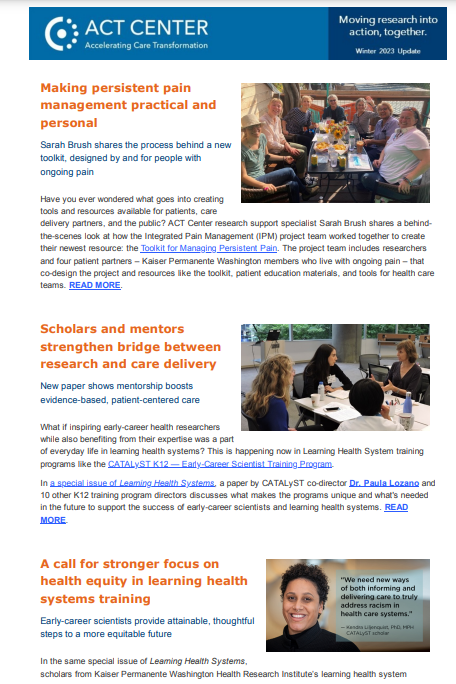
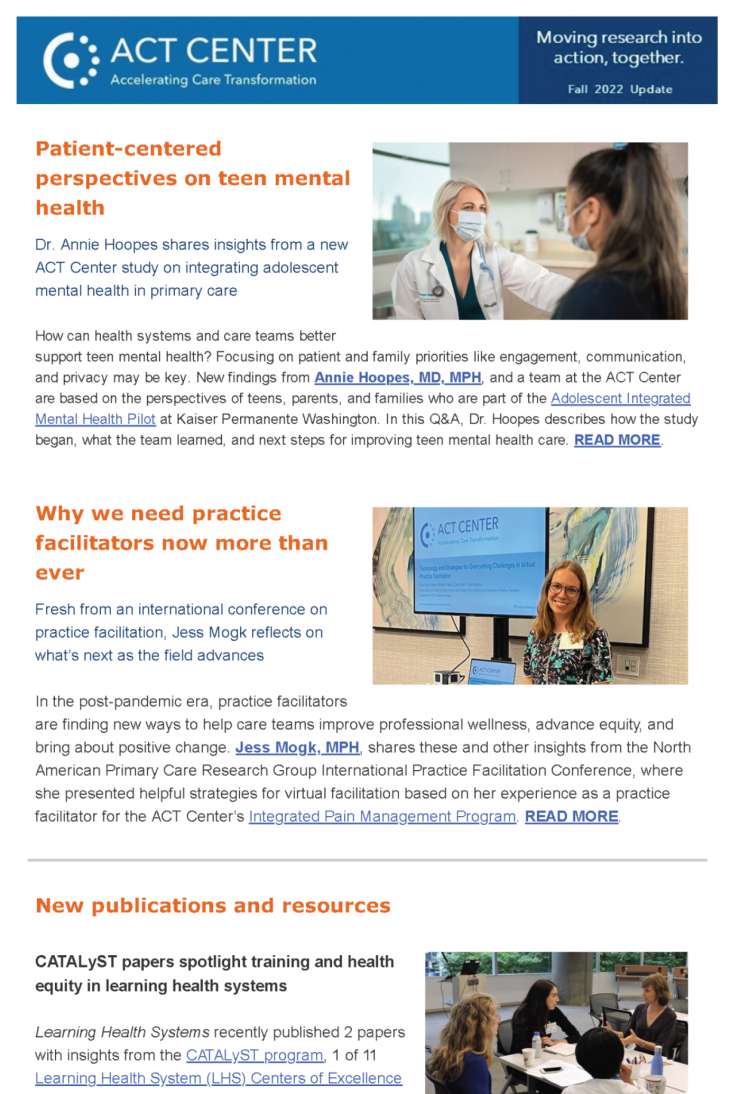
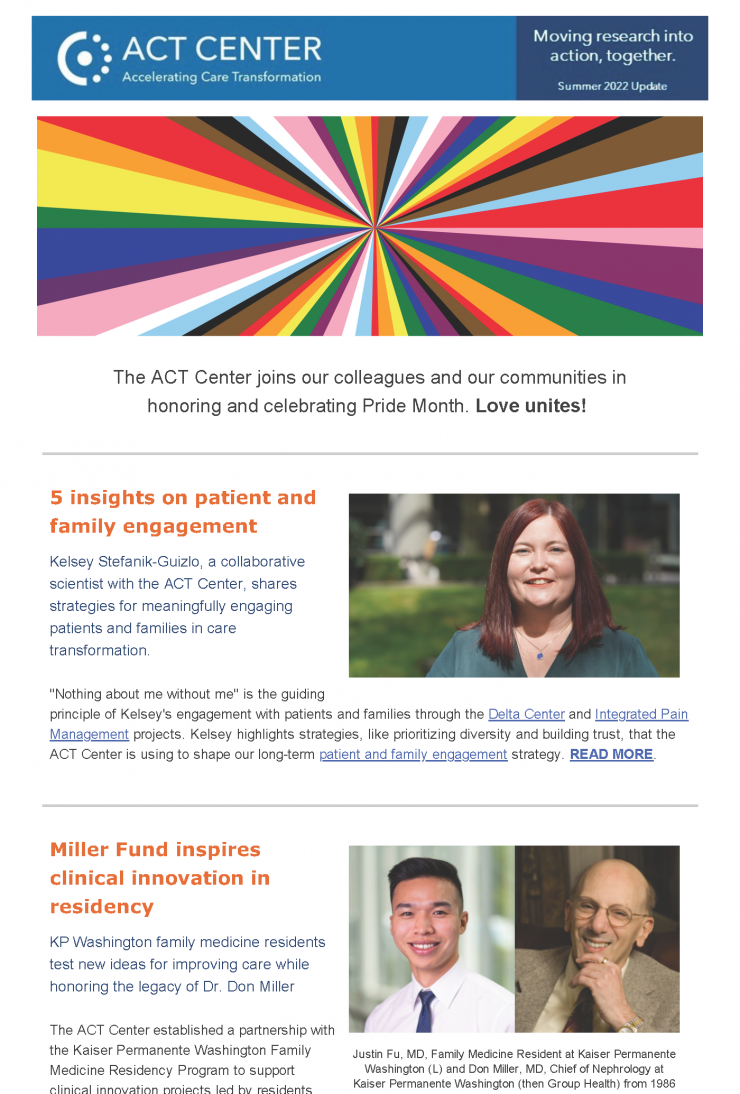
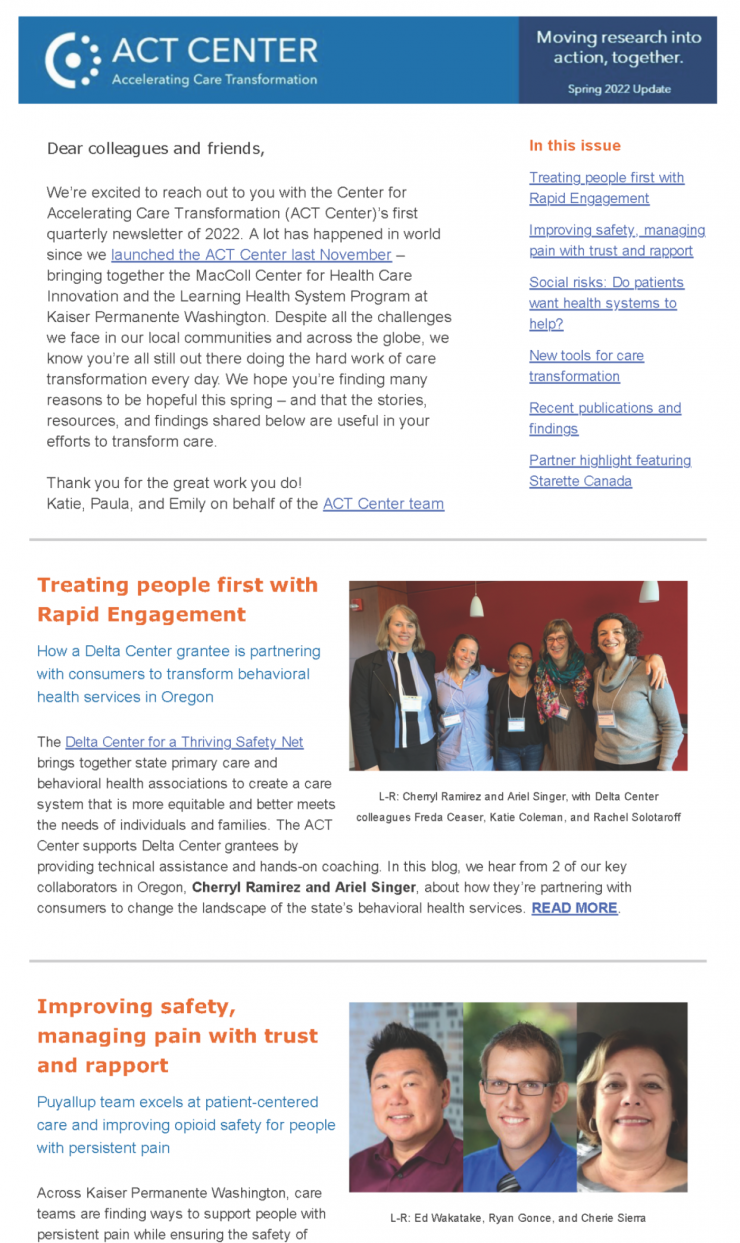
Current and past issues of the ACT Center Newsletter and MacColl Center Newsletter.
ACT Center Newsletter
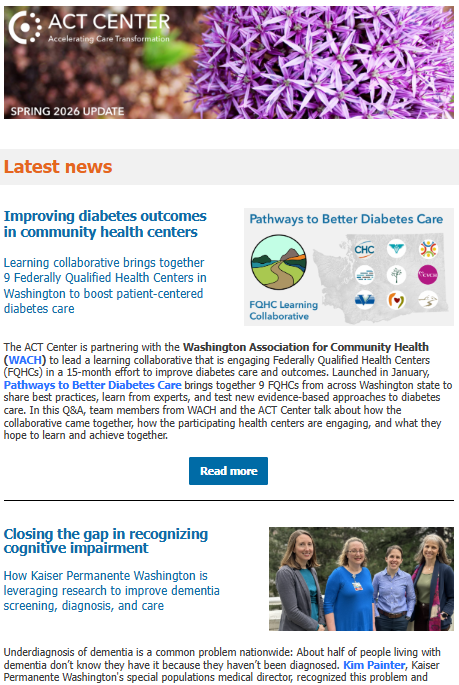
The ACT Center shares new findings, resources, and stories in our free quarterly newsletter. You can sign up to receive our newsletter here and view featured content from our most recent issue below and in the sidebar. PDFs of our past issues are also available on this page.
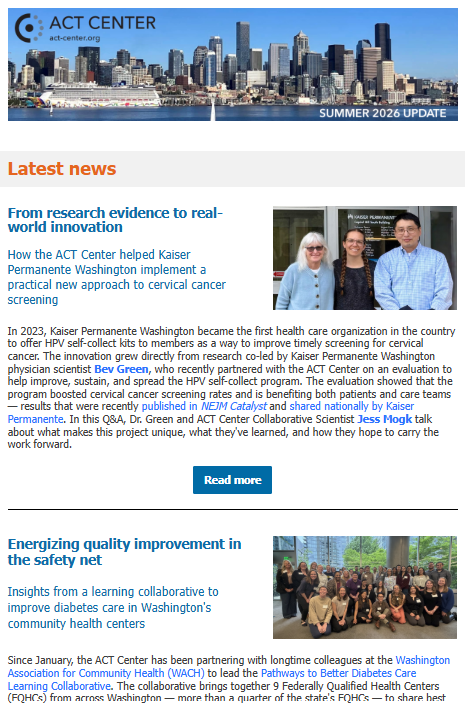
Our most recent newsletter: Summer 2026
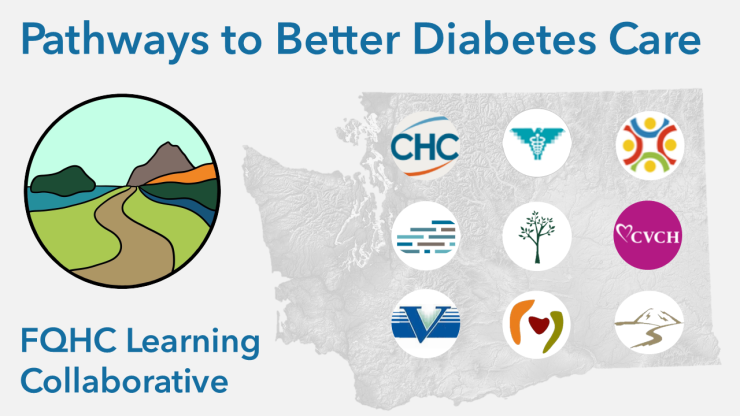
Our summer issue features news about how the ACT Center helped Kaiser Permanente Washington implement a practical new approach to cervical cancer screening, as well as highlights from a statewide learning collaborative to improve diabetes care in Washington's community health centers. We also welcome the third and final group of scholars in the Washington Learning Health System Embedded Scientist Training and Research (LHS E-STAR) Center.
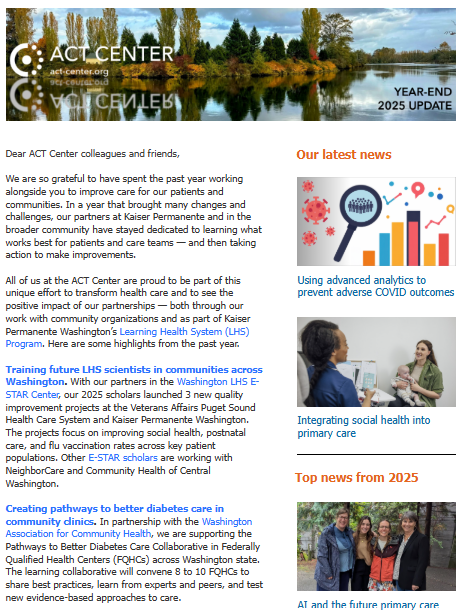
Recapping highlights from our collaborations with Kaiser Permanente and community organizations in 2025 — and expressing gratitude for our many partnerships.
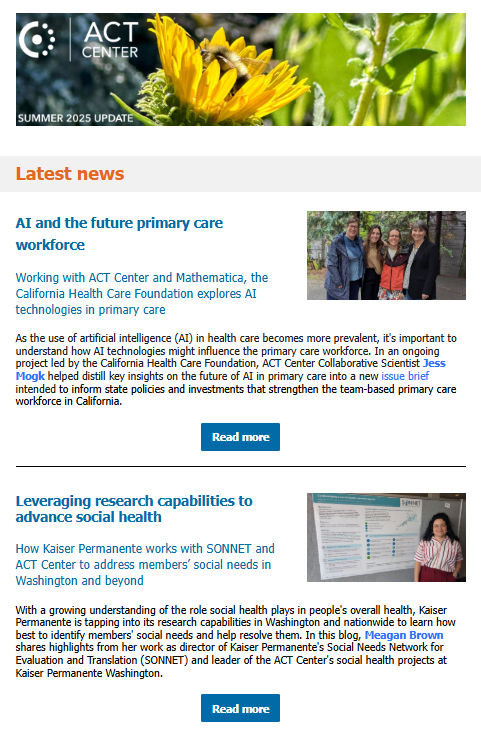
How Kaiser Permanente works with SONNET and the ACT Center to address members’ social needs, insights on the future of AI and the primary care workforce, and more!
Announcing 3 new scholars for the LHS E-STAR training program, along with several new papers on various aspects of social health, including links to cost and utilization.
Improving pain care by restoring patient-clinician trust, understanding how social health is linked to intersectional identities, and more highlights from our recent findings.
Introducing the Toolkit for Managing Persistent Pain, bridging the gap between research and care delivery, and a call for stronger focus on health equity in learning health systems training.
Patient and family engagement, clinical innovation opportunities for family practice residents, reducing missed visits with predictive analytics, and more.
Transforming behavioral health services in Oregon, patient-centered care to improve opioid safety for people with persistent pain, new findings and resources to advance social health, and more.