Lessening the impact of wildfires on KP Washington members with asthma

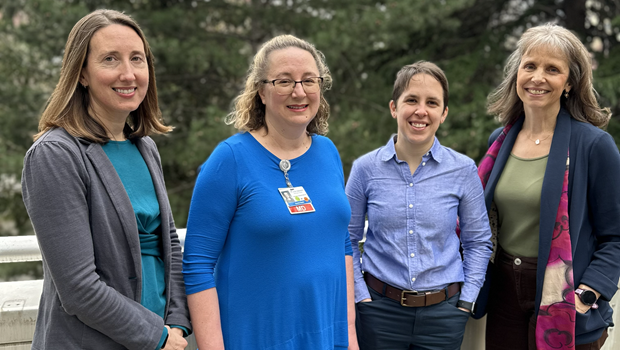
Meagan Brown and Raj Sundar co-lead wildfires-asthma project via a fellowship grant from UW Center for Health and the Global Environment
The effects of climate change can intensify the impact of social needs and worsen chronic illnesses for people who may already be facing housing insecurity, barriers to accessing health care, or lack of knowledge about steps they can take to try to stay healthy. For example, increasing wildfires in Washington lead to poor air quality that can cause severe breathing problems for people with asthma — many of whom aren’t aware of effective steps to minimize their risk.
Thanks to a $65,000 Implementation and Evaluation Fellowship from the University of Washington Center for Health and the Global Environment (CHanGE), ACT Center team member Meagan Brown, PhD, MPH, is working with Kaiser Permanente Washington to help close this gap. Brown oversees the ACT Center’s social health portfolio and is director of Kaiser Permanente’s Social Needs Network for Evaluation and Translation (SONNET). She is leading the fellowship project alongside Raj Sundar, MD, a Kaiser Permanente Washington physician and district medical director, and collaborators from Public Health–Seattle & King County. Their goal is to create easy-to-use tools to help primary care teams talk with members about practical ways to keep their asthma from getting worse when wildfires strike.
To create these tools, the team will work in partnership with patient advisory groups and local climate experts to adapt an evidence-based Wildfire Smoke Practice Resource for use in primary care. The resource will include instructions for building a low-cost home air filter and reducing smoke exposure. It will also prompt clinicians to discuss and offer Single Maintenance and Reliever Therapy (SMART) to patients with uncontrolled asthma, an inhaler regimen proven to reduce flare-ups.
Primary care teams at 2 Kaiser Permanente Washington medical centers will be trained to use the adapted resource, with conversation prompts and materials embedded in Epic. By combining patient education with evidence-based asthma treatment, the project aims to reduce preventable symptoms during smoke events and create a practical, scalable model for primary care. Looking long-term, that will mean:
- Integrating climate health into routine care delivery and operations, so clinical teams have clear guidelines on what to do when air quality worsens
- Creating a system where patient outreach from population health and community health is married with clinical messaging, so members feel continuity rather than receiving disconnected messages
- Enabling a pathway where members at risk during smoke events receive timely, proactive communication plus access to supports (filters, inhaler refills, spacers, etc.)
Dr. Sundar describes his vision as “marrying population health outreach and clinical care delivery — so that when a wildfire hits, it's not just a community health alert going out to members at higher risk, but also your own doctor and care team reaching out and supporting you.”
By Jessica Ridpath

Related news

Integrating social health into primary care
November 17, 2025

Using research capabilities to advance social health
August 2, 2025
Other recent news
Closing the gap in recognizing cognitive impairment
March 19, 2026
Improving diabetes outcomes in community health centers
March 16, 2025

Using advanced analytics to prevent adverse outcomes from COVID-19
November 12, 2025