Insights from a learning collaborative to improve diabetes care in Washington’s community health centers
June 25, 2026
Energizing quality improvement in the safety net
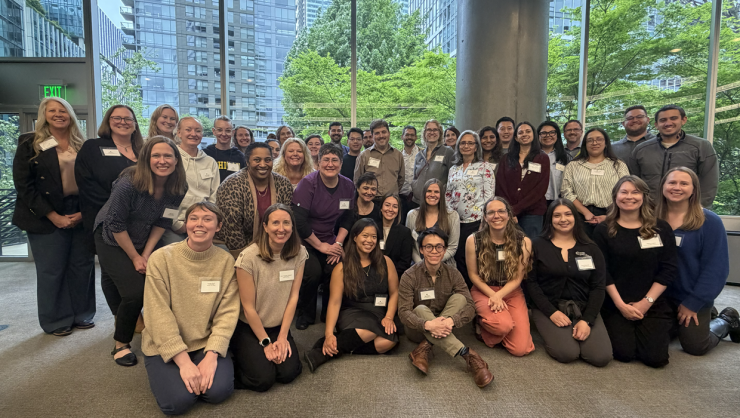
Participants at the first in-person meeting of the Pathways to Better Diabetes Care Learning Collaborative
Insights from a learning collaborative to improve diabetes care in Washington’s community health centers
By Claire Allen, MPH, co-director of the Center for Accelerating Care Transformation (ACT Center) and senior manager of collaborative science at Kaiser Permanente Washington Health Research Institute
Since January, I’ve had the pleasure of partnering with longtime colleagues at the Washington Association for Community Health (WACH) to lead the Pathways to Better Diabetes Care Learning Collaborative. The collaborative brings together 9 Federally Qualified Health Centers (FQHCs) from across Washington — more than a quarter of the state's FQHCs —to share best practices and learn from each other’s experience implementing strategies to improve diabetes outcomes for patients.
Our WACH-ACT Center team focused the collaborative’s first few months on building relationships with our FQHC partners in virtual meetings and coaching calls. We worked closely with each team to understand their specific challenges, needs, and ideas for improvement — and these early interactions helped build a lot of excitement for our first in-person meeting, held May 15 in Seattle. We co-designed the meeting with our FQHC partners and based the agenda on what they wanted to get from the day. The event drew about 45 attendees from multidisciplinary quality improvement teams across the 9 health centers: diabetes educators, clinical pharmacists, medical assistants, nurses, clinicians, and representatives from leadership and quality.
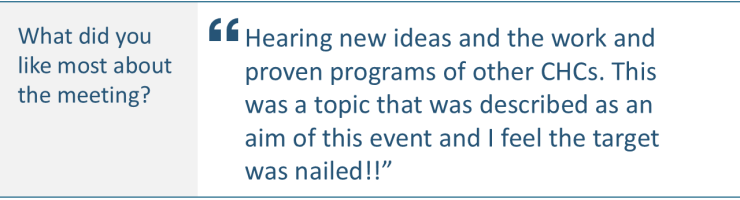
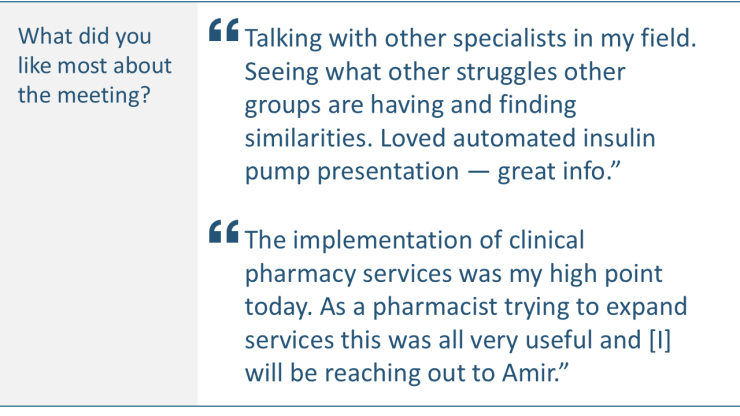
It was a diverse group with a lot of energy, and I was struck by how excited everyone was to be there. Despite the competing priorities and persistent challenges they face in their everyday work, they were eager to learn from each other, problem-solve together, and have fun along the way. In our exit evaluations, every attendee agreed that the event was a good use of their time, with the vast majority replying “strongly agree.” Here are a few key insights I took away about what worked well to build such positive energy and opportunities for connection among our FQHC partners.
We started with a clear focus on people
The day kicked off with a poignant patient story shared by Chi-Ming Sun, a diabetes educator at Neighborcare. His story was about how hard it is to help people achieve better health outcomes when they have to manage diabetes amid complex lives and barriers to care. But he found that being persistent and using multiple evidence-based strategies can truly improve a patient’s health over time, even if the path isn’t linear. This helped ground our conversations and activities in the patient experience and reminded us how important the challenging work of quality improvement is.
Next, we gave participants a chance to get to know one another in a “role mixer” where people from similar roles gathered at assigned tables to chat — sharing about their daily work, a project they’re currently focused on, and one thing they wished other team members understood about their role. Most participants rated this activity as 5 out of 5 in their evaluations, and several mentioned the role mixer as the part of the day they enjoyed most.
We made each health center’s work visible to spark ideas and resource sharing
After the role mixer, we gave each FQHC team a chance to visually map the current care journey of a patient with diabetes. The maps illustrated how each organization structures diabetes care, helping to identify gaps and opportunities for improvement. Later, attendees participated in a “gallery walk” — reviewing each process map to see how other health centers approached diabetes care. Using different-colored dots, participants indicated areas where they had a tool or resource to share and areas where they had similar challenges that they wanted to discuss further.
Again, most participants rated this activity as 5 out of 5, and many commented that learning how other diabetes programs work was a highlight of the event.
We balanced didactic learning with interactive activities — and added some fun
Next, we moved to the first of 2 best practice presentations led by team members from participating FQHCs who have served as co-designers for the collaborative, helping us structure it to be as relevant and helpful to the health centers as possible. Matt Perez, a physician at Community Health Center of Snohomish County, shared updated standards of care related to automated insulin pumps. Later in the day, Valley View clinical pharmacist Amir Piranfar discussed integrating clinical pharmacy into diabetes care. Participants rated these didactic sessions just as highly as the more interactive activities and noted that the information was highly useful for people in similar roles.
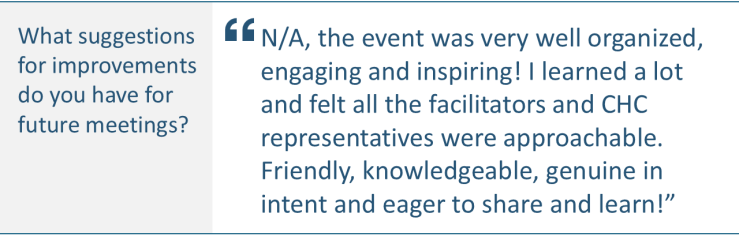
After the second presentation, ACT Center team member Sunday Brush led a brief, energizing dance party that ensured participants were smiling for our group photo afterward. In the evaluation question about suggestions for future meetings, one attendee answered, "more dance parties!"
The day’s final big session was “Wise Crowds,” an interactive roleplay activity from Liberating Structures that gave people the opportunity to play the role of a “client” coming to a group of “consultants” to get advice on how to solve a specific problem. The goal of the activity was to tap into the wisdom and creativity that exists across different roles and functional silos — maximizing the group’s collective intelligence to overcome challenges in diabetes care.
In the evaluations, Wise Crowds was a favorite among the day’s activities, and many participants mentioned how helpful it was to hear different perspectives and brainstorm with other health care teams.
We tried to generate excitement about what’s coming next
We closed the day with each FQHC team getting the chance to report out to each other on a couple key next steps: (1) one thing they learned that they want to take back to their health center and (2) who they connected with or plan to reach out to in the future. Teams had clear and specific ideas about how to apply learnings from the day at their home organizations.
When we reviewed the exit evaluations, we were surprised to find that the most common suggestion for improvement was to meet in person more often or for a longer time!
Through next January, we’ll continue bringing the FQHC teams together in virtual sessions held every other month. Our final gathering will be in person in March. Each FQHC team will have a chance to present their results and to connect with and learn from each other in person once more, with a focus on sustaining all the good improvement work they supported each other in achieving.
![“Meeting other CHC [community health center] leaders and realizing we are all in the same boat and have similar challenges. I enjoyed picking everyone's brain and learning what [has] worked for them.”](https://www.act-center.org/application/files/thumbnails/small/4517/8242/7697/Diabetes-LC_Quote_1.png)
![“I loved hearing so many different point[s] of view from different roles. Team based care has many parts and this opened my mind to all of the roles.”](https://www.act-center.org/application/files/thumbnails/small/2517/8249/2916/Diables-LC_Quote_4.png)